
Insights
How a Custom Website Keeps Your Brand Consistent From the Homepage to Checkout
By Elliot Mendiola · Published Aug 11, 2026

Your Brand Is Built One Page at a Time, Whether You Plan It or Not
Every business has a brand, whether anyone sat down and designed it or not. It shows up in the colors on your sign, the tone of your emails, and the website customers land on after a Google search or a friend's recommendation. When those pieces do not match, customers notice, even if they could not tell you exactly what felt off.
Most small businesses end up with that mismatch by accident, not by choice. A logo gets made once, a website gets built a few years later on whatever template was available, and an ordering tool or account portal gets added on top whenever the old process broke down. Nobody ever sat all of it down together and asked if it looked like one business.
Templates Fit Everyone, Which Means They Fit No One
There is nothing wrong with starting on a website builder. Plenty of solid businesses run on one for years. The tradeoff is built into the product though, a template is designed to work for thousands of businesses at once, so it ends up looking close to whatever the theme shipped with rather than close to you.
A custom website starts from the other direction. Your brand comes first, and the site gets built around it, so the header, the footer, the contact form, and the checkout page all draw from the same colors, type, and voice instead of a handful of defaults stacked on top of each other over time.
Consistency Shows Up on the Revenue Line, Not Just the Design Line
This is not only a matter of taste. Lucidpress's State of Brand Consistency research found that presenting a brand consistently across every touchpoint correlated with a revenue increase of up to 23 percent, and a later update from the same research put the upper bound closer to 33 percent. People trust what looks familiar, and a site that reads like several different companies stitched together tends to read as less trustworthy too, regardless of how good the business actually is.
Keep Ordering and Your Customer Portal Under Your Own Roof
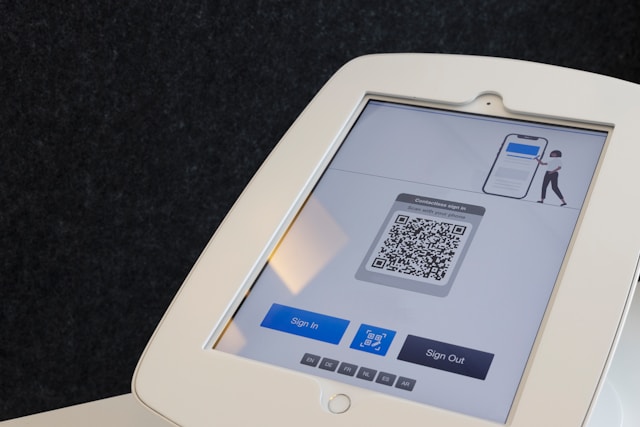

When customers order or manage their account through a third-party app, your brand is sharing that screen with every competitor on the same platform, one tap away at all times. Delivery platforms like DoorDash, Uber Eats, and Grubhub typically charge 15 to 30 percent in commission per order, and once packaging, promotions, and refunds are factored in, restaurants often lose closer to a third of the order's value to the platform itself.
Moving even part of that volume onto ordering built into your own website keeps more of that money in the business, and it keeps browsing, ordering, and checkout wrapped in your brand the whole way through instead of handing that last impression to someone else's app icon. The same reasoning holds for a customer portal handling scheduling, invoices, or account access. Every screen a customer touches should look like it came from the same place.
What Our CMS Actually Does About It


This is the exact gap our CMS was built to close. A short list covers most of it:
- Drag and drop to rearrange sections, and click directly on any headline or image to edit it, so a brand update does not need a developer or a ticket.
- Built-in accessibility checks that flag issues while a page is being built, not after it is live.
- SEO checks that catch problems before they cost you search ranking.
- Design features like parallax scrolling and layout options that most small business sites never get access to.
Taken together, the point is a site that looks and feels like your business on every page, without needing a design team on staff to keep it that way.
Accessible Design Reaches More of Your Customers
About 1.3 billion people worldwide, roughly 16 percent of the population, live with a disability that affects how they use the internet, and 73 percent of disabled users will leave a website altogether if it is hard to use or navigate. That is a sizable share of potential customers for any business, long before legal considerations enter the picture at all.
A site that gets built with accessibility in mind from the start, rather than patched after the fact, simply works for more of the people who show up looking for you. It is one more place where consistency matters, because a brand that only works for some visitors is not really consistent at all.
Your Next Step
If your website, ordering flow, and customer portal feel like they came from three different companies, that gap is worth closing. Take a look at our website services at https://greymountain.software/services/websites, or reach out through https://greymountain.software/contact and tell us what your brand actually looks like across every page it lives on. If this was useful, pass it along to another owner juggling one too many disconnected logins.
Sources
Brand Consistency and Revenue
Lucidpress (now Marq). "The State of Brand Consistency." 2019.
https://pub.lucidpress.com/5026f8f1-6004-496e-b308-71662d214bb3/document.pdf
Used for: revenue increase (23 to 33 percent) tied to consistent brand presentation across touchpoints.
Third-Party Ordering Costs
Rezku. "Third-Party Delivery Fees in 2026: What DoorDash, Uber Eats & Grubhub Really Cost Restaurants." 2026.
https://rezku.com/blog/third-party-delivery-fees-in-2026-what-doordash-uber-eats-grubhub-really-cost-restaurants/
Used for: delivery platform commission rates (15 to 30 percent) and effective order cost after fees, promotions, and refunds.
Accessibility and Customer Reach
Tenet. "80+ Web Accessibility Statistics to Know in 2026." Published Oct 28, 2025.
https://www.wearetenet.com/blog/web-accessibility-statistics
Used for: global disability population affecting internet use (1.3 billion, 16 percent), and disabled-user abandonment rate on hard-to-use websites (73 percent).